
  |

|
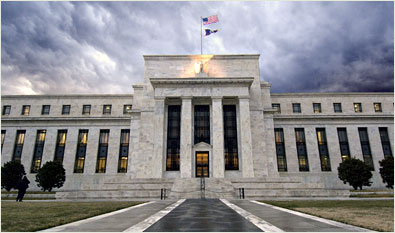
Are U.S.debt investments safe?
The U.S. Government finances its massive spending in three ways:
The combination of these three methods provides the financing for government spending with Q.E. being rarely used. Many argue Q.E. is like the “lender of last resort”. It is usually frowned upon by world governments as a” banana republic” like policy, meaning governments can only finance themselves by printing up paper dollars like confetti and then using that money to buy whatever it wants.
The market for U.S. government debt dwarfs all other asset markets and is commonly referred to as the bond market. It is the supermarket for U.S. and global debt and trades billions of dollars’ worth global government I.O.U.s daily.
The more a government overspends the more it has to borrow. The more it borrows, the riskier that government debt is perceived as it relates to its ability to pay off its debt.
Much like a bad brother-in-law writing checks and I.O.Us all over town, the more debt that is issued, the higher the risk of default.
When countries continually increase their borrowing, and/or Q.E. to finance themselves, much like a compounding credit card, the interest that must be paid on that debt grows ever larger.
It eventually can become serviceable only by issuing even more debt at an ever-increasing rate. This accelerating rate of borrowing increases interest payments on the growing debt, creating a vicious cycle of paying off old debt by issuing new debt.
Think back to our brother-in-law once again. It’s much like him paying off his older credit card debt by borrowing from another credit card.
The eventual end game of this scheme comes when those doing the lending get nervous that the I.O.U.s they hold will never be paid. In the bond markets, this increasing risk is reflected by higher interest rates. Investors, perceiving more and more risk by the borrower, demand higher interest be paid to them to compensate them for that risk.
In our brother-in-law example, you may not loan him any more money at 1% but you might consider it if he pays you 10%.
The world debt markets work the same way.
When a government exhibits the propensity to run higher and higher deficits and needs to issue more and more debt, the interest rate it must pay on its debt rises in order to get more people to continue to loan it money.
As the amount of debt grows, the interest rates the government must pay go higher and higher.
At some point, a government may no longer afford to borrow at the higher rates and a partial or total default of that debt may occur.
In fact, economic history maintains a perfect record when dealing with overspending governments. The result is always higher and higher interest rates, followed by massive inflation, that eventually leads to total or partial default. The default is accomplished by a currency devaluation or an outright refusal to make good on all its I.O.U.s.
Either way it goes has dire consequences for both the debt holders and the unfortunate citizens of that country because their dollars lose most of their purchasing power and therefore impoverish many.
Think Mexican Peso and you get the jest of what occurs.
For now, fret not.
A default, even a partial one, by the U.S. government, is still regarded as inconceivable. How long that can go on is anyone’s guess.
But whether it’s through borrowing or just printing up the dollars, as long as the U.S. government keeps spending more than it takes in, the event gets closer and closer every passing day.
In conclusion, given the circumstances, we must ask the question: “Are U.S. treasuries really the safest investments in the world?”
If history is any example, you have to wonder.
Unless the U.S. gets its financial house in order, stops it’s incessant borrowing and curbs it’s spending excesses, those smart money investors buying these supposedly safe U.S. treasuries could end holding an awfully big bag of nothing.
Only time will tell.
Treasuries anyone?
“Watching the markets so you don’t have to”
Questions on where to invest?
(530) 559-1214